Kamis, 01 Maret 2012

The "Uniformed Sexual Predator Deterrence Act"


Sarah Smith was driving to work when her car was sideswiped by a man on a motorcycle. Like many people in straitened financial circumstances, she had let her liability insurance lapse. To make matters worse, her driver's license had expired. So she was probably overwrought when Pittsburgh Police Officer Adam Skweres arrived -- and frantic when he pulled her aside. The ensuing conversation left her utterly terrified. 

Officer Skweres told Smith that "he could make it look like [the accident] was my fault or he could give the driver a ticket for failure to obey signs," she recently recounted to the Pittsburgh Post-Gazette. The price of a favorable assessment would take the form of unspecified sexual favors, and Skweres quite generously promised that what he would demand of Smith would be "as bad as what would happen to me in jail." 

Adam Skweres, accused sexual predator.
If Smith put up a fight, Skweres insisted, she would be arrested for resisting arrest, handcuffed, and then raped in the back seat of the police car. Before the officer could make good on his threat, the situation changed, and he agreed to let the terrified young woman go -- but only after gesturing to his gun and warning her that "If you say anything about this I'll make sure you never walk, talk, or breathe again."

This incident took place on July 14, 2008. Smith reported the assault to the Pittsburgh Police Bureau, as did two other women who had endured nearly identical threats from Skweres (one of whom, a woman embroiled in a child custody dispute, was told that she could purchase a favorable recommendation to the child welfare bureaucracy in exchange for oral sex). The uniformed predator was allowed to continue patrolling the streets -- and to collect his $57,000 annual salary -- until February 17, when he was arrested for sexually assaulting a young woman in her home six days earlier.

The February 11 assault took place in the home of a young woman whose boyfriend was in jail. After asking the victim if she was wearing a wire, and turning on the kitchen faucet to conceal any potentially incriminating noises, Skweres explained the nature of the transaction: He would "help" her boyfriend in exchange for sex. After forcing the traumatized woman to service him, the cop cleaned himself up with a paper towel (which he folded and placed in his pocket, perhaps after recalling the lessons taught by Monica Lewinsky's blue dress) and left.

Skweres was as predictable as he was persistent. Last December, he had paid a similar visit to Melissa Watkins, whose boyfriend was also in jail. She was alone with her young daughter when the cop materialized to proposition her. 

"He locked my front door and everything, he said, `so no one could bother us,'" Watkins told the Post-Gazette. Unzipping his uniform trousers, Skweres offered the same arrangement: He would "help" Watkins' boyfriend in consideration of sexual services. To her considerable credit, Watkins -- despite being utterly terrified -- refused. 

"There's a man with a badge and a gun in front of you, trying to proposition you," she recalled. "You don't know which way it's going to go." 

 In his memoir Breaking Rank: A Top Cop's Expose of the Dark Side of American Policing, former Seattle Police Chief Norm Stamper warns that "sexual predation by police officers happens far more often than people in the business are willing to admit.... My cautious guess is that about 5 percent of America's cops are on the prowl for women. In a department the size of Seattle's that's sixty-three police officers. In San Diego [where Stamper began his police career], 145. In New York City, 2,000. The average patrol cop makes anywhere from ten to twenty unsupervised contacts a shift. If he's on the make, chances are a predatory cop will find you. Or your wife, your partner, your daughter, your sister, your mother, your friend."

The most significant advantage wielded by uniformed predators is not their physical size or even their arsenal; it's their ability to criminalize even the most tentative act of resistance on the part of their potential victims. Recall what Sarah Smith was told during her encounter with Skweres: If she fled, she would be arrested for resisting and obstructing. If she fought back, she most likely would have been charged with aggravated assault.  

This is exactly what happened in the case of a single mother in Milwaukee (whose name has not been publicly disclosed) who was raped by Officer Ladmarald Cates when he responded to a 911 call after someone hadhurled a brick through the woman's bathroom window. After dismissing the woman's boyfriend on an errand, Cates maneuvered the woman into the bathroom,  where he forcibly sodomized and raped her.

Immediately after the assault, the woman -- barefoot and wearing tattered clothing -- ran screaming from the house. Cates stormed out of the house and grabbed thevictim by the waist, causing her feet to strike his partner. This gave theofficers an excuse to arrest the battered and traumatized woman for “assaultingan officer.” 

She was taken to jail and held for 12 hours before receivingmedical aid. After the hospital visit, she was sent back to jail for four daysbefore being released without charges. 

I'd rather take my chances with private gang-bangers.
 This was not Cates's first assault -- but the department wasn't willing to take disciplinary action of any kind until DNA evidence corroborated the rape victim's account. Instead of prosecuting Cates, the department fired him for "idling or loafing on duty." He was convicted of federal civil rights charges on January 15. Cates is hardly representative of Milwaukee police officers -- not because of his casual corruption, but because he has actually been punished: The department holds down the number two spot in the national police brutality rankings

Cates's victim was handcuffed, jailed, and abused even further despite the fact that she had done nothing to resist. If she had put up resistance of any kind during the July 2010 encounter, she would likely be in prison -- or dead -- and Cates probably would have received a commendation for valor. This is because once a sexual predator in uniform initiates force against a Mundane, any effort to repel that aggression is treated as a crime

This principle, as I've noted before, was expressed by Gregory J. Babbitt, assistant prosecuting attorney for Michigan’s OttawaCounty, during the October 4 oralargument before the state supreme court in the case of People v. Moreno. That case deals with the question of whether a citizen has a legallyprotected right to resist an unlawful search or unjustified arrest by a policeofficer.

Associate justice MichaelCavanaugh described a scenario in which a woman in police custody issexually assaulted during a body search. In that situation, Cavanaugh asked Babbitt,could the victim be charged under the State’s "resisting andobstructing" statute?

 "Technically, youcould do that," Babbitt admitted, hastily adding that "asa prosecutor, I wouldn’t do that." Rather than offering physicalresistance and thereby risking both lethal retaliation and criminal prosecution, the victim should simplyendure the assault and then file a civil complaint after the fact. 

That's what Ladmarald Cates's victim did -- and, as long as resisting arrest is treated as a criminal act, that's the best outcome future victims can expect. 

There is  another alternative: We can restore legal protection for the right to resist unlawful arrest and other criminal aggression by police officers.


Ideally, police departments as we know them wouldn't exist: "Law enforcement" agencies are innately tyrannical artifacts incompatible with a free society. Where the use of force is concerned, peace officers should have exactly the same legal standing as any other citizen -- in other words, they can employ force (including arrest and detention) for the exclusive purpose of protecting innocent life and private property against criminal aggression.


We should work to abolish the "crime" of resisting arrest. Those who commit actual crimes against persons or property can't really be expected to submit to police without a struggle; people who don't commit such offenses shouldn't be required to submit to police at all. 

To that end I offer the following model statute -- which we could call the "Uniformed Sexual Predator Deterrence Act." Although the version below is based on the constitution and laws of the State of Idaho, it can provide a suitable template for similar legislation elsewhere.  


Prevailing dogma dictates that all citizens -- including isolated, vulnerable women-- have an unqualified duty to submit to anyone carrying a gun and state-issued credentials -- including sexual predators like Adam Skweres and Ladmarald Cates. The duty to submit includes allowing ourselves to be shackled and incarcerated without just cause, onthe assumption that the same State that stole our liberty will agree not totake any more of it when the matter is examined in court. And submission to unlawful police violence toofrequently results in injury, sexual assault, and death.


Restoring theRight to Resist Arrest: A Model Statute

An Act

Relating to the restoration of the right of a citizen toresist unlawful arrest, search, and seizure, by amending Title 18, Idaho Code,through deletion of section 18-705 and its replacement by language restoringthe common law right to resist unlawful arrest and establishing penalties forunlawful assault by public officials and sentence enhancement followingconviction of those who resist arrest in the course of committing crimesagainst persons and property.

Legislative findings:

Whereas – Article I, section 2 of the Idaho StateConstitution decrees: “All politicalpower is inherent in the people.[…] Government is instituted for their equalprotection and benefit, and they have the right to alter, reform or abolish thesame whenever they may deem it necessary; and no special privileges or immunities shall ever be granted that may notbe altered, revoked, or repealed by the legislature” (emphasis added); and

Whereas – The authority delegated by thesovereign people to any government official, including a licensed peaceofficer, cannot be greater than that of any law-abiding citizen from whom thatauthorization is derived; and

Whereas – Title 18, Ch. 7, Sec. 18-703 ofthe Idaho State Code designates the arrest or detention of any individual, orthe seizure, levy, or dispossession of any property “without a regular processor other lawful authority,” as a crime; and

Whereas – Title 18, Ch. 7, Sec. 18-706 ofthe Idaho Code defines a physical assault by a public officer “under color ofauthority, without lawful necessity” as a crime punishable “by a fine notexceeding $5,000 and imprisonment in the county jail not exceeding one (1)year”; and    

Whereas The Idaho Code Judicial Instructions (ICJI 1262) asserts that "it is the person's duty to refrain from using force or any weapon in resisting arrest regardless of whether or not there is a legal basis for the arrest" -- thereby creating a spurious "privilege" or "immunity" liable to revocation by the legislature; and

Whereas – Current state judicial precedent(State v. Lusby, 2008) encourageslicensed peace officers to violate those statutes by provoking physicalconfrontations in the hope of charging citizens with “resisting arrest” inorder to circumvent Fourth Amendment restrictions on search and seizure(according to the Idaho Court of Appeals, “although officers mayhave conducted an unconstitutional search or seizure, a subsequent attack onthe officer is a new crime unrelated to any prior illegality”); and

Whereas –The Idaho State Supreme Court, in its 1973 decision State V. Richardson, explicitly acknowledged that “At common law a person unlawfully arrested could resist such an arrestby the use of reasonable force,” then – without legislative direction or otherauthorization by the sovereign people of the State – decreed that “the trendis, and should be, away from the traditional common law rule, and therefore wehold that if a person has reasonable ground to believe he is being arrested bya peace officer, it is his duty to refrain from using force or any weapon inresisting arrest regardless of whether or not there is a legal basis for thearrest,” thereby illegitimately abrogating what the Court itself acknowledgedto be a valid and long-standing individual right; and

Whereas – In its decision in JohnBad Elk v. U.S. (1900), the U.S. Supreme Court ruled that a police officertrying to make an unlawful arrest has “no right to unnecessarily injure, much less tokill, his assailant; but where the officer is killed in the course of thedisorder which naturally accompanies an attempted arrest that is resisted, thelaw looks with very different eyes upon the transaction, when the officer hadthe right to make the arrest, from what it does if the officer had no suchright” – thereby explicitly recognizing a citizen’s right to use lethal forceto prevent an unlawful arrest; and

Whereas--  "The right to resist unlawful arrest memorializes one of theprincipal elements in the heritage of the English revolution: the belief thatthe will to resist arbitrary authority in a reasonable way is valuable andought not to be suppressed by the criminal law” (PaulG. Chevigny, The Right to Resist an UnlawfulArrest, 78 Yale L.J. 1128,1129 [1969]);

Therefore,be it enacted by the Legislature of the State of Idaho:

SECTION1. That Title 18, Chapter 7, sec. 18-705 of the Idaho Criminal Code dealingwith “Arrests and Seizures of Persons or Property – Special Officers,” ishereby amended by removing the offense of “Resisting and obstructing officers,”and replacing it with the following:

18-705.Resisting lawful arrest, and the crime of unlawful arrest. Every person whowillfully resists, delays or obstructs any licensed peace officer in the courseof executing a valid warrant or conducting a lawful arrest (or any citizen seeking to execute a lawful citizen's arrest) will – uponconviction of a property crime or crime of violence – be subject to anadditional penalty of up to one year imprisonment in the county jail, and/or afine not exceeding one thousand dollars ($1,000). These penalties are ofsecondary effect and cannot be imposed in the absence of a predicate offenseagainst person or property.

SECTION2. That any individual – whether licensed peace officer or member of the public– who assaults or detains another, or presumes to seize or levy property,without a valid warrant or court order, or legitimate probable cause that acrime against person or property has been or is about to be committed, isguilty of the crime of false arrest, as well as other related offenses, and isliable to appropriate criminal prosecution and civil action.

SECTION3. Notwithstanding any previous judicial ruling or administrative finding orpolicy, the right of the individual to resist unlawful arrest will berecognized as a valid defense in all criminal and civil proceedings. 

(Note: A version of this model statute was published in an on-line edition of Republic magazine.) 


Thank you so much for helping to keep Pro Libertate on-line!


 Be sure to check out Republic magazine -- and sign up for your free digital subscription!


Dum spiro, pugno!

Kamis, 23 Februari 2012

Officer Safety Uber Alles: The Coercion Cartel's Prime Directive


The Minnesota state legislatureis debating a measure that would amplify that state’s “Castle Doctrine” byrecognizing that innocent people have no “duty to retreat” in the face ofcriminal aggression. 

This would expand existing legal protection for the defensive use oflethal force against homeinvaders -- including, where appropriate, the government-employed variety. That prospect is causing the local tax eaters’ guild to irrigatetheir skivvies. 

Dennis Flaherty, executivedirector of the Minnesota Police and Peace Officers Association, complains thatenactment of the measure “could result in dangerous situations for policeofficers, who regularly enter homes without permission,” reports Twin Cities ABCaffiliate KSTP. “We’re fearful that people will react and shoot and ourofficers could be mistaken for someone that they believe is trying tojeopardize their safety,” simpers Flaherty. In encounters of the kindFlaherty describes, it would be more accurate to say that citizens would recognize police officers as people who “jeopardizetheir safety.”

In aninterview with Minnesota Public Radio, Flaherty stated the matter even morecandidly: “Officersafety is the primary concern that we have about this bill…. [E]very day inthe state of Minnesota, we have peace officers that are entering on somebody’sproperty – often times by stealth so that we have the element of surprise. Weare extremely fearful that with this shoot-first-ask-questions-later mentalitythat this bill establishes, that we will have officers that will not only be inharm’s way, but in fact will be injured or perhaps killed.” 


The tacit subtext of Flaherty’s complaint is the assumption that in everyencounter between citizens and police, officer safety is the paramount concern,and citizen safety is of negligible importance. This is why, in thewords of the Rochester Post-Bulletin,“prosecutors, police chiefs and sheriffs across the state are lining up” tooppose the measure. 


When intruders seek to enter ahome without permission, observed the Post-Bulletin,“those on the other side of the door don’t always know that it’s a policeofficer who is entering their residence. They might have been asleep, awakeningonly when they hear the sounds of a door being kicked in or footsteps on thestairs. Their judgment and awareness might be impaired by drugs, alcohol,mental illness or the belief that an abusive ex-boyfriend or rival gang membersmany have arrived with bad intentions.”

Minneapolis SWAT operator gets a medal for raiding the wrong house.

A likelier scenario involves theeven deadlier possibility that the door has been forced open by state-licensedmarauders who can kill anyone within the dwelling with impunity. 

So theappropriate remedy would be to abolish paramilitary police raids, correct? Notaccording to the Post-Bulletin’seditorial collective: “We’re with the law enforcement officers on this one….This [expanded Castle Act] would give people the impression that when theirfront doorknob is rattled in the middle of the night, they have free license toshoot first and ask questions later. That’s not a good thing.”

A license of that kind is “not a good thing” – foranyone other than fully accredited members of the state’s punitive priesthood,of course. Whenever one of the Regime’s costumed enforcers kills a mereMundane, he can usually avoid criminal prosecution simply by claiming that he “feltthreatened” by something – a furtive gesture, a momentary refusal to cooperate,a dirty look, or something else detectable only through the mysticalmind-reading facility that comes with a “peace officer” license and a piece ofgovernment-issued costume jewelry. 

Critics of the CastleDoctrine bill complain that it is unnecessary, since Minnesota state statutesalready recognize that a homeowner defending his property against invaders –other than the government-employed variety – has no duty to retreat. The billwould expand legal recognition of that right to include any circumstance inwhich an individual’s life is threatened – and this, according to critics,would have disastrous consequences.


“There are just way too manysituations that could potentially escalate to the point of using deadly force[in public] where if someone would just walk away, the deadly force could havebeen avoided,” complainsFergus Falls Police Chief Kile Bergen. “That’s our job; we’re supposed togo in and apprehend these people. You as a citizen, that’s not yourresponsibility. It might be to protect yourself, but it’s not your job to ridthe world of dangerous people.”

Chief Bergen is particularlyoffended by the fact that the bill would establish a “reasonable individual”test for the use of deadly force. Although Bergen whines that this would givecitizens “more authority than a police officer has to use deadly force,” thatprovision would actually apply a standard similar to as the “reasonableofficer” test. The measure also criminalizes the act of disarmingcitizens unless this is done pursuant to a lawful arrest -- just as the state’s “resistingand obstructing” statute can be used to prosecute a citizen who disarms apolice officer. 


If Chief Bergen actually thinkshis job has something to do with “rid[ding] the world of dangerouspeople,” he’s not only unqualified to be a peace officer, he’s a tragicallydeluded soul who should be kept away from sharp objects. More telling still ishis perception that everyday life is cluttered withsituations pregnant with potential gunplay. 


That’s how police are trained toperceive the world: They see the public as an undifferentiated mass of menace,an all-encompassing threat to that most important of all human considerations, “officersafety.” This is why they are prepared to employ potentially lethal force atthe first sign of non-cooperation, and escalate the encounter until the Mundaneeither submits or is killed. They are prepared to shoot first in the sereneconfidence that the questions asked later will be intended to exonerate theofficer. 


Bergen’s objections – which arequite representative of the police union’s opposition to  enhanced Castle Doctrine protections – assume thatcitizens who take responsibility for protecting themselves will start thinkingand behaving like cops. No, this isn’t quite accurate: Even in the most extravagantworst-case scenario, the expanded Castle Law wouldn’t be taken as a generallicense for citizens to conduct home invasion raids, like the December 2007police assault on the home of Minneapolis resident Vang Khang.

It was after midnight when Khang’s wife, YeeMoua, heard the sound of a window shattering, followed by the quiet murmurof male voices. She frantically dialed 911 to summon the police. When theintruders came upstairs, Vang fired a shotgun at them, provoking a brief burstof return fire. Thankfully, nobody was injured, although some of the officersreported trivial shrapnel damage to their body armor. 


It was after the exchange ofgunfire that the couple learned the invaders were the local SWAT team, whichhad been sent to the wrong address. 

The City apologized for theunjustified raid – and thenpresented eight SWAT officers with commendations for “perform[ing] very bravelyunder gunfire.”


Accordingto Police Chief Tim Dolan, “the officers didn’t make any mistakes.” This would mean that they intended to raid the wrong house and expose innocent children to gunfire. 
 
Apparently, that’s the stuff ofwhich contemporary heroism is made.

"The easy decision wouldhave been to retreat under covering fire,” Dolan declared. “The team did nottake the easy way out. This is a perfect example of a situation that could havegone horribly wrong, but did not because of the professionalism with which itwas handled."

 Note how Dolan conferred the commendations on the SWAT team for refusing to retreat when the situation demanded that they do so. It was their refusal to "walk away" that Dolan considered a praiseworthy display of professionalism.

 How often do employees ofprivately owned businesses receive professional commendations after completelymessing up? Are awards of that sort routinely handed out to private employeeswhose incompetence endangers innocent lives, and results in extensive damage toprivate property? 

More to the point: Would a private security company hand out bonuses and promotions to employees who terrorized an innocent family and perforated their home with automatic weapons fire? Of course not: Only employees of the State’s coercion cartelare permitted to behave that way.

Chief Dolan, not surprisingly, opposesthe “Castle Doctrine.” This is because “lessening the burden” on citizens whoconfront intruders would mean they might be “more willing to take shots at thepeople who are behind that door” – just as Vang Khang did the night Dolan’sstormtroopers invaded his home without a warrant or just cause.

The Castle Doctrine “isn’t goodfor public safety,” insists Dolan, who – like most of those in his profession –appears to believe that the police are the only part of the population worth protecting. 


 Obiter dicta

On February 19, I had the singular honor to introduce Dr. Ron Paul at a campaign event in Boise:


 Thanks so much for helping to keep Pro Libertate online!


Be sure to check out Republic magazine, and sign up for a free digital subscription. 


Dum spiro, pugno!

Selasa, 14 Februari 2012

The Global Land Grab


Retaliation: Peter Doan Van Vuon's wife examines the rubble of their demolished home.

In Vietnam, Peter Doan Van Vuon, a farmer who foughtback when police came to confiscate his farm, is widely regarded as a hero.His neighbors have actually considered building a statue in his honor. In theUnited States, he would almost certainly be dead. 

 
The strike team that assaulted Vuon’s 40-hectare fish farmin Hai Phong on January 5 did demolish the family’s modest two-story home,forcing them to live in a makeshift shelter fashioned from a tarp. On previousperformance it’s reasonable to say that their counterparts in the employ of theRegime in Washington would have made sure to incinerate the family as well.

 
The raiders – roughly 100 police and soldiers -- didn’texpect resistance when they arrived to evict the 49-year-old Vuon and hisfamily and seize the property. Vuon’s wife, Ngyuen, had just returned from droppingoff the kids at school when the strike team arrived. Rather than submittingmeekly to the invaders, the Vuon family fought back, using improvised pelletguns and land mines. Nobody was killed or seriously injured, but the armoredassailants – six of whom suffered trivial wounds – were forced to retreat.

 
In the United States, Vuon -- assuming that he survived the fire-bombing that appearsto be the Regime’s preferred tactical endgame in standoffs of this kind -- would have been execrated as a would-be "cop killer." Although he and several relatives were arrested, thestate-run media in Communist Vietnam “have openly sympathized with him ininvestigative reports,” notes the AP. “Their dispatches have alleged that HaiPhong officials lied about details of the eviction. They also have said thefamily was cheated in 1993 when they were given a lease of only 14 yearsinstead of what should have been 20 years.”

 
More remarkable still is the fact that Prime Minister NguyenTan Dung intervened to investigate the matter. After the inquiry concluded that local authorities broke the law by attempting toconfiscate Vuon’s land, he ordered that the officials responsible for thedestruction of the family’s home be suspended and investigated for possiblecriminal prosecution. 

 
In Vietnam, the government claims ownership of all landwhile issuing long-term land grants to farmers. In 1993, Vuon used his lifesavings to buy and reclaim a small tract of swampland, eventually establishinga small but profitable fish farm.  

 
In 2009, the Hai Phong citygovernment suddenly “discovered” that Vuon’s land grant had expired and announcedits intention to confiscate the property without compensation in order to sellit to land developers. When Vuon filed a lawsuit against the seizure, the courtpromised to let them keep the land if he dropped the case. This was a ruse:After Vuon dropped the suit, the city government initiated seizure proceedings.Deprived of any legal means to protect their property, Vuon and his familybegan making preparations to defend their land by force. 

The Vuon family's new home.

From the perspective of their rulers, Vuon and his familywere engaged in a seditious conspiracy, particularly when it’s understood thatthey are not only capitalists but devout Catholics. 

At a time when Vietnam’seconomy is afflicted with the highest inflation rate in Asia and confrontationsbetween small farmers and government officials are increasingly common, Vuon’sarmed defiance is a spark that could ignite a widespread conflagration.However, rather than simply extinguishing Vuon outright, Communist government ofVietnam has actually examined his grievances on their merits. 

It is impossible to believe that any affiliate or subdivision of the U.S. Government would be so conciliatory. 

 
Similar developments are taking place in mainland China,which like Vietnam is ruled by a one-party State that is Marxist in itsprofessed ideology but corporatist in practice.

 
Gu Kul, who used to own and operate an automotive partsbusiness in Chengdu, the capital of Sichuan province, has been victimized byChina’s predatory corporate elite. A few years ago, local urban planners,seeking to enhance their revenue stream, ordered the seizure of Gu’s 13-acrecommercial property. In short order, a fleet of bulldozers arrived, protectedby a small army of police and hired thugs. 

 
“I had to look on as bulldozers demolished my property,” Gurecounted to Der Spiegel. Notsatisfied with the trivial, paltry compensation for the destruction of aprofitable and growing business and the theft of his property, Gu filed a legalchallenge under recently enacted national legislation that supposedly limitsseizures by local governments. 

 
In short order, Gu found himself being constantly trailed byblack-clad mercenaries in blacked-out SUVs. Their intentions were astransparent as their mirrored sunglasses were opaque. While Gu has managed toavoid capture, more than a few others have been kidnapped, tortured, and killedfor objecting to the ongoing land grab – and the revolt is propagating itselfacross rural China.

 
Yang Youde used to own a thriving cotton farm in Yuhan. In2009, local commissars, coveting the fertile land and well-stocked troutstreams, announced their intention to seize the property. After Yang filed alegal petition to protest the planned confiscation, police descended on hishome and hauled him away to a “black jail” where he was beaten and tortured.“They strung me up by my hands and put out cigarettes on my skin,” he recalledin an interview with the Telegraph ofLondon.  

 
Yang survived his time in police custody; Xue Jingbo ofWukan, a fishing village of 10,000, wasn’t so fortunate. During late 2011, arevolt erupted in the village over land confiscation, and Xue was designated tonegotiate on behalf of the population. Instead of listening to the village’scomplaints, the local government ordered Xue’s arrest. While in police custody,Xue died very quickly of what officials insisted were “natural causes.” Hisbody was never returned to his family. 

 
Rather than mourning, the locals organized. Thousands ofprotesters gathered in the village square to demand an investigation of Xue’sdeath and an end to the corrupt practice of seizing land for the benefit ofpolitically connected corporate interests. Anticipating that the localgovernment would demand reinforcements, the population erected roadblocks andother barricades at the village entrances. Using cellphones and social media,protesters contacted the BBC and other international media sources seeking topublicize the village’s plight and Xue’s murder.

 
After news of the protests reached a global audience lastDecember, China’s Public Security Bureau – that nation’s equivalent of theAmerican FBI or Russian KGB – shut down media access to Wukan and closed offmost internet links to the village. 

The local government, alarmed by the extentand intensity of the protests, was actually forced to flee for two weeks. Upontheir return the city officials promised to halt the ongoing land grab andinvestigate allegations of official corruption – for whatever a promise ofthat kind may be worth. 

Unfortunately, rather than simply withdrawing their consent to be ruled, the people of Wukan agreed to a series of "democratic reforms," including the appointment of a protester as a local commissar. Their exemplary defiance may have a healthier impact that the useless concessions they received.


In early February, more than 5,000 people took to thestreets of East and West Pahne Villages in Zhejiang Province to protest landseizures by local officials. The villagers became aware of the seizures onlyafter construction began on some of the stolen land.

 
"Officials from the village sold land,” explainedlocal resident Lu Yeqin. “This land originally belonged to the villagers. Afterit was sold, the [villagers] were not given any money for it. The villagers areupset, and after all, this land was passed down through their family business.They rely on the land for their livelihood, but now it has been sold."

 
As happened in Wukan, local Communist Party officials tookflight, regrouping in secret locations to await instructions from Beijing. Manyvillage activists are likewise seeking intervention by the central governmentin the mistaken hope that this will protect them from the corruption of localfunctionaries. 

 
Tragically, they don’t understand that the land grabs are aresult of central government intervention: In the teeth of a catastrophiceconomic downturn, China’srulers – like their counterparts in Vietnam -- are frantically seizing land andadding to the commercial and residential real estate glut in the hope ofboosting the GDP


“A large portion of China’s estimated 100,000 or so publicprotests each year are driven by rage over compulsory evictions,” notes the Telegraph. This is the sort of thingthat would never happen in the United States, of course – except for the factthat it happens all the time. 


As the Wall StreetJournal has pointed out, Chinese subjects who refuse to surrender theirhomes to the land-grabbers “are known as `nail households,' since their homesare sometimes left stranded in the middle of busy construction sites. Moreoften, however, they are driven away by paid thugs."


That description summons memories of  NewLondon, Connecticut resident Lauren Canario, who was kidnapped by rentedthugs – that is, officers of the New London policedepartment -- for refusing to vacate property that had been stolen througheminent domain on behalf of a federally subsidized "public/private partnership"(that is, fascist entity) called the New London Development Corporation (NLDC).


Lauren was not a trespasser; she was visiting theproperty with the permission of its owner. However, the NDLC haddecided to steal the land and give it to the Pfizer Corporation,and this act of vulgar larceny received thebenediction of the Supreme Court. Lauren was arrested,imprisoned for months, and -- in a touch that would have earned theadmiration of Soviet or Chinese commissars -- repeatedly subjected topsychological evaluation.


The "nail households" were hammered down, the Pfizer plantwas quickly erected, and the expected kickbacks were delivered. Shortly thereafter theeconomy collapsed and Pfizer decided toshut down the facility and move its employees elsewhere, leaving behind arotting and useless building that had been constructed on stolen land.


This case is a mere snapshot of an ongoing national crime wave. Former real estate developer Don Corace writes in his recent book GovernmentPirates: The Assault on Private Property Rights and How We Can Fight It: "Arrogantand corrupt city and county officials -- with near limitless legal budgets ...continue to align themselves with well-heeled developers, political cronies,and major corporations to prey on the politically less powerful anddisenfranchised, particularly minority communities.”


Eminent domain "abuse" (a term that refers to the predictableexercise of an innately illegitimate power) is just one of many ways thatproperty can be blatantly stolen through political means: "Through localzoning and the regulation of wetlands and endangered species, governments takeproperty without compensating owners and also extort land and money inreturn for approvals." 


This is, of course, exactly the same racket being run bylocal commissars in the People's Republic of China and the Socialist Republic of Vietnam. It isinteresting, and somewhat unsettling, that people to whomprivate property may be a relatively new and exotic concept seem to have abetter understanding of what is happening than do their counterparts here inthe putative Land of the Free – and that they display more intrepidity in fighting fortheir freedom than can be found here in the purported Home of the Brave.


Be sure to check out Republic magazine -- and sign up for your free digital subscription. 


Dum Spiro, Pugno!

Minggu, 05 Februari 2012

The Pseudo-Courage of Chris Kyle


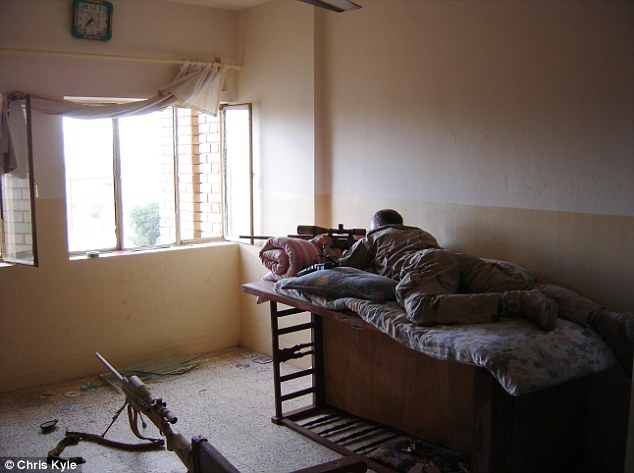
Chris Kyle as a Navy SEAL sniper in Fallujah, Iraq.


Thatkind of courage, which is conspicuous in danger and enterprise, if devoid ofjustice, is absolutely undeserving of the name of valor. It should rather beconsidered as a brutal fierceness outraging every principle of humanity. – 

Cicero, TheOffices, Book I Chapter XIX

 
As a sniper with the Navy SEALs in Iraq, ChrisKyle was shot twice and wounded on several other occasions. He is creditedwith 160 confirmed kills. He received several commendations. Of his fiercenessthere is no reasonable doubt. Whether his exploits display courage is anentirely separate question. 


AmericanSniper: The Autobiography of the Most Lethal Sniper in U.S. Military History, theghost-written memoir for which Kyle claims primary authorship, offersconvincing testimony that Kyle not only failed to display genuine courage inIraq, but was incapable of recognizing it when it was exhibited by desperatepatriots seeking to evict the armed foreigners who had invaded and occupiedtheir country. 

 
The insurgents who fought the American invasion (and the few“allied” troops representing governments that had been bribed or brow-beateninto collaborating in that crime) were sub-human “savages” and “cowards,”according to Kyle.


“Savage, despicable evil,” writes Kyle. “That’s what we werefighting in Iraq…. People ask me all the time, `How many people have youkilled?’... The number is not important to me. I only wish I had killed more.Not for bragging rights, but because I believe the world is a better placewithout savages out there taking American lives.”


None of the American military personnel whose lives werewasted in Iraq had to die there, because none of them had any legitimate reasonto be there. From Kyle’s perspective,however, only incorrigibly “evil” people would object once their country hadbeen designated the target of one of Washington’s frequent outbursts ofmurderous humanitarianism. 

 
The insensate savagery of the Iraqi population wassupposedly illustrated by the first kill Kyle recorded as a sniper, whilecovering a Marine advance near Nasiriyah in March, 2003.


“I looked through the scope,” Kyle recalls. “The only peoplewho were moving were [a] woman and maybe a child or two nearby. I watched thetroops pull up. Ten young, proud Marines in uniform got out of their vehiclesand gathered for a foot patrol. As the Americans organized, the woman tooksomething from beneath her clothes, and yanked at it. She’d set a grenade.”

 
Kyle shot the woman twice.

 
“It was my duty to shoot, and I don’t regret it,” Kyleattests. “The woman was already dead. I was just making sure she didn’t takeany Marines with her. It was clear that not only did she want to kill them, butshe didn’t care about anybody else nearby who would have been blown up by thegrenade or killed in the firefight. Children on the street, people in thehouses, maybe her child….”

 
Of course, if the Marines hadn’t invaded that woman’sneighborhood, she wouldn’t have been driven to take such desperate action – butKyle either cannot or will not understand the motives of an Iraqi patriot.

 “She was … blinded by evil,” Kyle writes of the woman hemurdered from a safe distance. “She just wanted Americans dead, no matter what.My shots saved several Americans, whose lives were clearly worth more than thatwoman’s twisted soul.”

 
Were Kyle just a touch more literate, he might recognize theterm untermenschen, a Germanexpression that encapsulates his view of the Iraqis who took up arms to repelforeign invaders. From his perspective, they were incurably inferior to their“liberators” and possessed of an inexplicable hatred toward their naturalbetters. 

 
For some reason many Iraqis resented the armed emissaries ofthe distant government that had installed Saddam in power, built up his arsenaland apparatus of domestic repression, and then conferred upon the inhabitantsof that nation the unmatched blessing of several decades of wars, embargoes, airstrikes,disease, and the early, avoidable deaths of hundreds of thousands of children. 

 
“The people we were fighting in Iraq, after Saddam’s armyfled or was defeated, were fanatics,” Kyle insists. “They hated us because weweren’t Muslim. They wanted to kill us, even though we’d just booted out theirdictator, because we practiced a different religion than they did.”

 Actually,most of them probably wanted to kill Kyle and his comrades because they had invaded and occupied their country. They wereprepared to use lethal force to protect their homes against armed intruders whohad no right to be there. Ironically,Kyle’s book offers evidence that he understands that principle; he simplydoesn’t believe that it applies to Iraqis.

 
In one incident described by Kyle, he and several other U.S.personnel raid an Iraqi home, in the basement of which they discover a massgrave containing the bodies of several soldiers and Marines. For severalpanic-stricken moments, Kyle is understandably terrified by the thought that hemight find the lifeless body of his younger brother, a Marine who had also beendeployed to Iraq. 

 
With obvious and vehement disgust, Kyle cites the “murderedyoung men whose bodies we had pulled out” of that basement grave as evidence ofthe bestial nature of the enemy. He exhibits no interest at all in the factthat tens of millions of Iraqis have seen friends and family meet violent,avoidable deaths as a result of the wars and sanctions imposed on their countryby Washington. Untermenschen,apparently, aren’t entitled to experience grief and rage – much less the rightto defend their homes and families against aggressive violence. 


 After returning from his first combat tour in Iraq, Kylerecalls, he was rudely roused from slumber one morning when the burglar alarm wentoff. Although this was a malfunction rather than a real emergency, Kyle’sreaction was revealing.

 
“I grabbed my pistol and went to confront the criminal,” herecalls. “No son of a bitch was breaking into my house and living to tell aboutit.”
 
Why was it “evil” for Iraqis to feel exactly the same wayabout the foreign sons of bitches who broke into their country and wrecked theplace? 

Later in the book, describing a stalking exercise during histraining to become a sniper, Kyle recounts how he “heard the distinct rattle ofa snake nearby.”

 
“A rattler had taken a particular liking to the piece ofreal estate I had to cross,” Kyle recalls. “Willing it away didn’t work…. Icrept slowly to the side, altering my course. Some enemies aren’t worthfighting.”

 
Exactly: The only enemies worth “fighting,” apparently, arethose who aren’t capable of hurtingyou when you trespass on their turf. 

 
The Gadsden Flag – featuring a coiled rattlesnake and thedirective “Don’t Tread On Me” – was, and remains, the best symbolic expressionof authentic American patriotism. Genuine American patriots can understand why patriots of other countries would feel similar attachments, and be similarly inclined to repel foreign invaders. This is why they willnever support any war that puts other Americans in the position of killingforeign patriots who are defending their own homes.  

 
A rattlesnake defending its territory earns Kyle’s respect;an Iraqi patriot fighting on his home soil with his back to his home and theface to his enemy, however, is “blinded by evil” and not truly human.

 
“They may have been cowards, but they could certainly killpeople,” observes Kyle of the guerrillas. “The insurgents didn’t worry aboutROEs [Rules of Engagement] or court-martials [sic]. If they had the advantage, theywould kill any Westerner they could find, whether they were soldiers or not.”

 
If that charge (made on page 87 of Kyle’s book) is accurate,it might reflect the fact that the Iraqi resistance (as well as the tactics offoreign guerrillas who joined the fight) was playing according to ground rulesestablished by the U.S. early in the war. 
 
On page 79, Kyle describes the Rules of Engagement that hisunit followed when they were deployed to Shatt al-Arab, a river on theIraq-Iran border: “Our ROEs when the war kicked off were pretty simple: If you see anyone from about sixteen tosixty-five and they’re male, shoot ‘em. Kill every male you see. That wasn’tthe official language, but that was the idea.” (Emphasis in the original.)


Those orders were of a piece with the studied indifferenceto civilian casualties that characterized the “Shock and Awe” bombing campaignthat began the war. In preparing that onslaught General Tommy Franks and hismilitary planners were guided by a computer program that referred to civiliancasualties as “bugsplat.” Franks had no compunction about ordering bombing missionsthat would result in what the computer projections described as “heavybugsplat.” After all, aren’t the lives of American military personnel “clearlyworth more” – to use Kyle’s phrase -- than those of the Iraqi civilians, whowere mere insects to be annihilated?

 
In one of her occasional contributions to Kyle’s book, hiswife Taya rebukes people who criticize the bloodshed wrought in Iraq by herhusband and his colleagues: “As far as I can see it, anyone who has a problemwith what guys do over there is incapable of empathy.” The trait she describesisn’t empathy; it’s a variation on the kind of pre-emptive self-pity describedby Hannah Arendt in her study Eichmannin Jerusalem.

 
Referring to those who killed onbehalf of the Third Reich, Arendt observed:

 
“What stuck in the minds of thesemen who had become murderers was simply the notion of being involved insomething historic, grandiose, unique (`a great task that occurs once in twothousand years’), which must therefore be difficult to bear. This wasimportant, because the murderers were not sadists or killers by nature; on thecontrary, a systematic effort was made to weed out all those who derivedphysical pleasure from what they did....”

 
This was true even of those whobelonged to the SS: Even those in the Reich’s killer elite were not able tosuppress their conscience entirely. Thus the “trick used by Himmler — who apparently wasrather strongly afflicted by these instinctive reactions himself — was verysimple and probably very effective; it consisted in turning these instinctsaround, as it were, in directing them toward the self. So that instead of saying:`What horrible things I did to people!,’ the murderers would be able to say: `Whathorrible things I had to watch in the pursuance of my duties, how heavily thetask weighed upon my shoulders!’"

 
Kyle’smemoir is remarkable chiefly for the complete absence of the kind of moralanguish Arendt describes among the SS. Kyle eagerly participated in a patentlyillegal and entirely unnecessary war of aggression against a country that neverattacked, harmed, or threatened the United States. He killed scores of people,terrorized thousands more. As Kyle tells the story, he reveled in theexperience, and regrets only that he wasn’t able to slaughter more of the “savages”who surrounded him. 

 
DuringKyle’s last deployment to Iraq, his unit – Charlie Company of SEAL Team 3 –assigned themselves the nickname “The Punishers,” appropriating as theirinsignia the Death’s Head logo used by the psychotic comic book character ofthe same name. 

Interestingly,a groupof police officers in Milwaukee had exactly the same idea. Theyalso adopted the “Punisher” logo, which they displayed on their policevehicles and wore on knitted caps as they prowled the street in search of assesto kick. 

The most memorable exhibition of what they regarded as valor came inOctober 2004, when a thugscrum of “Punishers” beset a male dancer named FrankJude, who was nearly beaten to death because he was suspected of stealing abadge. 

 
After throwing Jude to the ground, the Punishers severelybeat, kicked, and choked him – then put a knife to his throat and jammed a peninto one of his ears. The victim survived the assault, but was left withpermanent brain damage. The officers later claimed that this amount of violencewas necessary to “subdue” Jude – who was never charged in connection with theincident. The jury in the criminal trial accepted that claim and acquitted theofficers – who were later found guilty of criminal civil rights violations. 

Imperial troops raid a home in Iraq....
During his service in Iraq, Kyle occasionally functioned as a lawenforcement officer of sorts. He was involved in dozens of raids against thehomes of suspected “insurgents,” many of whom were arrested on the basis ofuncorroborated accusations by anonymous informants. 

He allows that many of the people dragged off in shackles were entirely innocent, but maintains that he wasn't ever troubled by that fact; he was just doing his "duty."  

 Shortly before the war began, Kyle was part of a SEAL unittasked to enforce UNsanctions against Iraq by intercepting tankers leaving thecountry with unlicensed oil deliveries. On one occasion, he boarded a tankercommanded by a commercial sea captain who “had some fight in him, and eventhough he was unarmed, he wasn’t ready to surrender.” 

 
“He made a run at me,” Kyle continues. “Pretty stupid. Firstof all, I’m not only bigger than him, but I was wearing full body armor. Not tomention the fact that I had a submachine gun in my hand. I took the muzzle ofmy gun and struck the idiot in the chest. He went right down.”
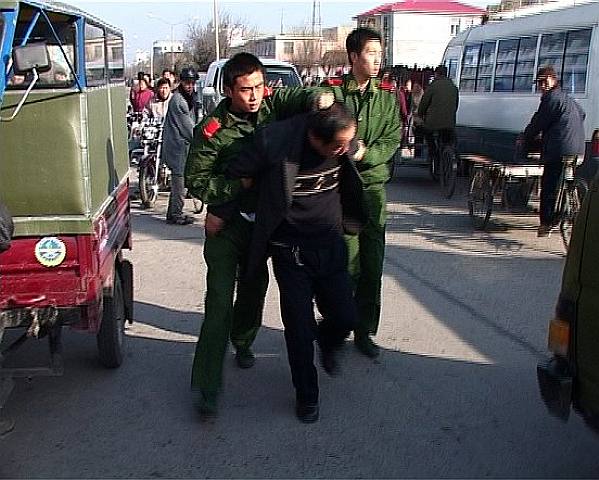
... and their domestic counterparts do the same in the U.S.
 
If Kyle had been a warrior, rather than a bully, he wouldhave admired the authentic courage displayed by the smaller, unarmed man whofought to protect the ship and cargo entrusted to him. 

How would he act if the roles were reversed – if he were the over-matched mantrying to defend private property from a group of state-licensed piratesclaiming “authority” from a UN mandate? We’ll never know the answer to thatquestion, because Kyle’s “courage” is of the sort that only manifests itself inthe service of power, and in the company of those enjoying a prohibitiveadvantage over their victims. 

 Kyle’s “service” continues, even though he’s retired fromthe military. He is president of CraftInternational, a Homeland Security contractor involvedin training domestic law enforcement agencies. It’s quite likelythat Kyle’s outfit will soak up a considerable portion of theroughly $1.5 billion dollars the Obama administration seeks to hire militaryveterans of Iraq and Afghanistan to work as police, emergency personnel, andpark rangers

Thanks for your help in keeping Pro Libertate on-line!


 Be sure to check out Republic magazine -- and sign up for your free digital subscription:


Dum spiro, pugno!